Global City Connect (GCC) | national city hub demand survey Participate in Survey
China–Pakistan Forum on Sustainable and Technological Development Concludes Successfully in Islamabad
Blog post descriptiThe China–Pakistan Forum on Sustainable and Technological Development convened in Islamabad, bringing together policymakers, international organizations, and business leaders to advance green technology, innovation, and long-term bilateral cooperation.on.
2/1/20264 min read


The China–Pakistan Forum on Sustainable and Technological Development concluded successfully in Islamabad from November 10 to 13, 2025, marking an important milestone in advancing bilateral cooperation in green development, science, and technology.
The Forum was jointly organized by the OIC Standing Committee on Scientific and Technological Cooperation (OIC COMSTECH) and the Sino-International Entrepreneurs Federation (SIEF), with co-organization by the Pakistan Special Investment Facilitation Council (SIFC), Special Technology Zones Authority (STZA), Rawalpindi Development Authority (RDA), and Pakistan–China Investment Company Limited (PCICL).
Held under the theme “Climate Mission: Building a Resilient World through Science and Technology,” the Forum brought together more than 200 participants, including government representatives from China and Pakistan, leaders from Islamic countries, policymakers, scholars, and entrepreneurs. Discussions focused on climate change, digital economy, agricultural technology, circular economy, urban development, and sustainable growth, combining high-level dialogue with pragmatic cooperation.
Opening Session: Building Consensus for a Shared Future
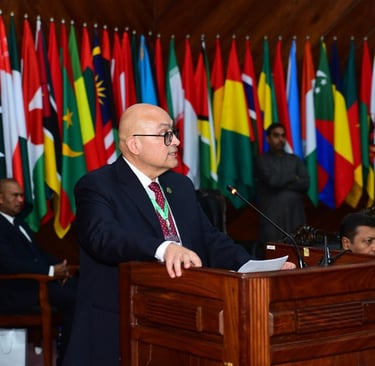
The Forum opened on November 10 with welcoming remarks by Dr. Shahid Mahmud, Honorary Senior Advisor to OIC COMSTECH, who underscored the strategic importance of China–Pakistan cooperation and COMSTECH’s role in strengthening partnerships between the Organization of Islamic Cooperation (OIC) and China.
Prof. Dr. M. Iqbal Choudhary, Coordinator General of OIC COMSTECH, highlighted ongoing collaboration with SIEF and Chinese institutions across areas including traditional medicine, biomedical research, natural products, expert exchange, capacity building, centers of excellence, and joint laboratories. He noted that “science knows no borders, and cooperation is the only viable path to addressing global challenges.”
Dr. Dong Bin, Chief Representative of SIEF, emphasized the Federation’s bridging role in advancing green and low-carbon development. He outlined the mission of SIEF’s Green and Low-Carbon Committee to connect Chinese green technologies with Pakistani industries and support objectives such as zero-carbon buildings and circular economy transformation.
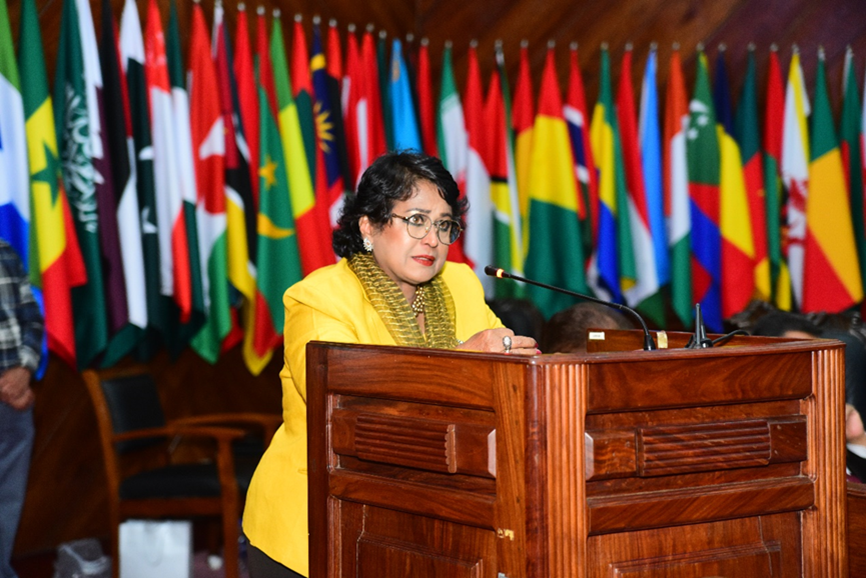
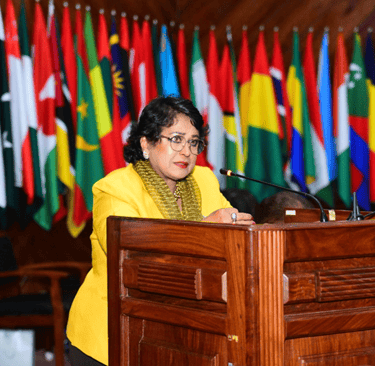
Former President of Mauritius and renowned biodiversity scientist H.E. Prof. Ameenah Gurib-Fakim delivered a keynote address titled “Harnessing Science and Big Data to Protect Biodiversity and Advance the Sustainable Development Goals.” She stressed that biodiversity should be regarded not merely as an environmental concern, but as a strategic economic asset.
Government representatives including Jamil Ahmad Qureshi, Secretary of SIFC, and Azfar Manzoor, Chairman of STZA, outlined Pakistan’s policy frameworks and institutional support for strategic China–Pakistan cooperation and climate-resilient innovation. Fu Chaoqing, Deputy General Manager of PCICL, highlighted the Forum’s significance in supporting the high-quality development of the China–Pakistan Economic Corridor (CPEC), noting Pakistan’s improving investment environment and complementary advantages for Chinese enterprises.
Keynote Sessions: From Vision to Implementation
Over the four-day program, COMSTECH organized a series of thematic keynote sessions:
On November 11, the session “International Dialogue: Roadmap for the Future of Higher Education and Science” featured keynote addresses by Prof. Gurib-Fakim on cultivating future innovators, and by Dr. Shahid Mahmud on the role of artificial intelligence in connecting humanity and nature.
On November 12, the session “Circular Innovation for Industrial and Agricultural Transformation” included remarks by Mr. Faraz Khan MBE, Founder of SEED Ventures and CEO of Spectreco, who emphasized the critical role of ESG investment in emerging markets.
Mr. Wang Jiangang, Special Advisor to SIEF’s Green and Low-Carbon Committee, delivered a keynote speech on building new international platforms for cooperation between Chinese cities and enterprises, calling for integrated collaboration across capital, technology, talent, culture, and policy.
On November 13, the session “Urban Planning and Sustainable Development” was jointly hosted by RDA and the Pakistan Council of Architects and Town Planners (PCATP). Speakers emphasized climate resilience, circular economy transitions, and the importance of coordinated international cooperation.
Role of Global City Connect
Martin Wang, Executive Vice Chairman of Global City Connect (GCC), participated in the Forum and related meetings. He noted that effective international cooperation requires not only policy dialogue, but also structured platforms capable of translating international resources into concrete, long-term projects. Wang emphasized that GCC will continue to leverage its global city and enterprise network to support pragmatic China–Pakistan cooperation in green technology, urban development, and sustainable investment.
Government–Business Dialogue and Tangible Outcomes
During the Forum, SIEF and Chinese enterprises held in-depth discussions with officials from SIFC, including Major General Asad Ur Rehman Cheema, Director General of SIFC, who reaffirmed Pakistan’s commitment to deepening cooperation with China and expanding trade linkages to the Middle East, Africa, and Europe.
To ensure practical outcomes, the Forum arranged one-on-one business matchmaking sessions, resulting in nearly 30 targeted negotiations and the signing of six Memoranda of Understanding (MOUs) across sectors such as energy transition, agricultural technology, urban management, advanced manufacturing, and biomedical innovation.
Conclusion
The Forum demonstrated that the China–Pakistan all-weather strategic partnership is gaining renewed momentum in the fields of sustainable development and technological innovation. Building on the success of the First China–Pakistan Green and Low-Carbon Summit held in April 2025, OIC COMSTECH and SIEF expressed their intention to continue joint efforts in 2026, strengthening policy coordination, establishing long-term cooperation mechanisms, and advancing concrete projects.
Through science, technology, and structured collaboration, the Forum laid a solid foundation for shared green prosperity and resilient development across China, Pakistan, and the broader Islamic world.
Source: Sino-International Entrepreneurs Federation (SIEF)