Global City Connect (GCC) | national city hub demand survey Participate in Survey

Chinese EV Expansion in Europe Highlights Opportunities for City-Level Cooperation
GCC says Chinese EV expansion in Europe highlights city-level cooperation opportunities, linking sustainable mobility, local economic development, and international partnerships between municipalities, industry, and communities.
2/9/20261 min read
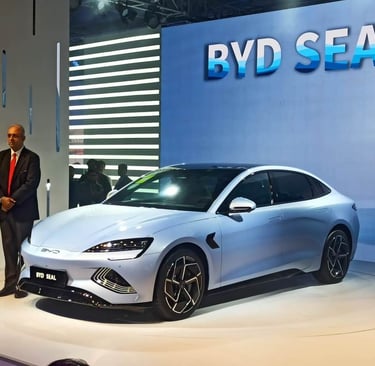
Chinese automaker BYD plans to sell more than 50,000 vehicles in Germany this year, a move that would more than double its registrations recorded in 2025, according to a report by electrive.com.
The company is also rapidly expanding its dealership and service network in the country. From just 26 locations at the start of 2025, BYD has grown to about 190 outlets and aims to reach at least 350 by the end of 2026. The strategy reflects a broader effort to strengthen local presence and customer support in the European market.
The report noted that plug-in hybrid vehicles are playing an increasingly important role in BYD’s European growth. In January 2026, plug-in hybrids accounted for roughly 40 percent of new registrations, while battery-electric vehicles represented about 60 percent. Several models, including the Seal U DM-i, have gained visibility on German roads as the brand adjusts to consumer demand and regulatory conditions.
Industry observers view the expansion as part of a wider trend of Chinese manufacturers moving beyond exports toward localized operations, including service networks, partnerships, and long-term market participation.
Global City Connect (GCC), an international cooperation platform linking cities, enterprises, and institutions, noted that developments in electric mobility are increasingly connected with urban sustainability planning, as municipalities worldwide adopt cleaner transportation and energy solutions.
The European expansion of electric vehicle makers is widely seen as an indicator of changing patterns in international industrial cooperation, where technology deployment, local employment, and city-level engagement become as important as trade itself.